Kira-kira satu pertiga daripada semua jenis kanser sebenarnya boleh dicegah setiap tahun jika orang ramai mengamalkan corak pemakanan yang sihat, tidak mengambil minuman beralkohol dan lebih banyak bersenam.
Tuesday, November 29, 2011
Ubah Gaya Hidup Elak Kanser
Thursday, May 29, 2008
Gastric Cancer
Causes
Several different types of cancer can occur in the stomach. The most common type is called adenocarcinoma, which refers to the way the cancer looks under the microscope. There are several types of adenocarcinoma. Because other types of gastric cancer occur much less frequently, this article focuses on adenocarcinoma.
Adenocarcinoma of the stomach is a common cancer of the digestive tract worldwide, although it is relatively uncommon in the US. It occurs most frequently in men over 40 years old. The incidence of this form of gastric cancer is extremely high in Japan, Chile, and Iceland. The incidence of most types of gastric adenocarcinoma in the US has declined over the years. Experts think the decrease may be related to reduced intake of salted, cured, and smoked foods.
However, the incidence of adenocarcinoma in the high part of the stomach where it connects with the esophagus has increased markedly, along with an increase in cancers of the lower esophagus. The reason for this increase is unknown.
Diagnosis is often delayed by the absence of symptoms in early disease or by self-treatment of symptoms that may be common to other, less serious gastrointestinal disorders (bloating, gas, and a sense of fullness).
Risk factors for gastric cancer are a family history of gastric cancer,
Prevention Cancer
One of the best ways to prevent cancer is to not smoke or chew tobacco. Many cancers can be prevented by avoiding risk factors such as excessive exposure to sunlight and heavy drinking.
Cancer screenings, such as mammography and breast examination for breast cancer and colonoscopy for colon cancer, may help catch these cancers at their early, most treatable stages. Some people at high risk for developing certain cancers can take medication to reduce their risk.
Thursday, May 8, 2008
Privacy Policy
Privacy Policy Statement
This is the web site of http://kemungkinan-penyembuhan-kanser.blogspot.comWe can be reached via e-mail at intansabreena@yahoo.com
For each visitor to our Web page, our Web server automatically recognizes no information regarding the domain or e-mail address.
We collect no information on consumers who browse our Web page.
With respect to cookies: We do not set any cookies.
If you do not want to receive e-mail from us in the future, please let us know by sending us e-mail at the above address.
From time to time, we make the e-mail addresses of those who access our site available to other reputable organizations whose products or services we think you might find interesting. If you do not want us to share your e-mail address with other companies or organizations, please let us know by calling us at the number provided above.
From time to time, we make our customer e-mail list available to other reputable organizations whose products or services we think you might find interesting. If you do not want us to share your e-mail address with other companies or organizations, please let us know by calling us at the number provided above.
If you supply us with your postal address on-line you may receive periodic mailings from us with information on new products and services or upcoming events. If you do not wish to receive such mailings, please let us know by calling us at the number provided above.
you may receive mailings from other reputable companies. You can, however, have your name put on our do-not-share list by calling us at the number provided above.Please provide us with your exact name and address. We will be sure your name is removed from the list we share with other organizations
From time to time, we may use customer information for new, unanticipated uses not previously disclosed in our privacy notice. If our information practices change at some time in the future we will post the policy changes to our Web site to notify you of these changes and we will use for these new purposes only data collected from the time of the policy change forward. If you are concerned about how your information is used, you should check back at our Web site periodically.
Customers may prevent their information from being used for purposes other than those for which it was originally collected by e-mailing us at the above address.Upon request we provide site visitors with access to no information that we have collected and that we maintain about them.
Consumers can access this information by e-mail us at the above address.Upon request we offer visitors no ability to have factual inaccuracies corrected in information that we maintain about them
With respect to security: We have appropriate security measures in place in our physical facilities to protect against the loss, misuse or alteration of information that we have collected from you at our site.
If you feel that this site is not following its stated information policy, you may contact us at the above addresses or phone number.
Wednesday, January 16, 2008
Reversing The Cancer Epidemic
5 Jenayah Kolar Putih / White Collar Crime
In the absence of such legislative disincentives, white collar crime in the areas of environment and health safety has continued unabated and extended into global markets.
Sunday, January 13, 2008
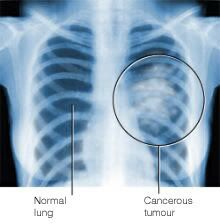
Kanser Paru-Paru
APAKAH KANSER PARU-PARU?
Kanser paru
Friday, January 11, 2008
Membalikkan Wabak Kanser / Reversing The Cancer Epidemic
4 Jawatankuasa Pakar Dan Badan Penggubal Undang-Undang / Expert Committees And Regulatory Agencies
Key governmental decision and policies are generally determined by recommendations of cancer institutions, designated expert scientific committees and regulatory bodies. Their independence, integrity, expertise and accountability are thus matters of critical concern.
Legislation to ensure full accountability and transparency of all cancer institutions involved in cancer research and related activities is long overdue.
Legislation is also needed to ensure that cancer institutions direct the highest priorities, with minimally half their budgets specifically allocated to research and outreach on primary cancer prevention.
Wednesday, January 9, 2008
Adakah Semua Benjolan Dalam Payudara Menandakan Kanser? / Are All Lumps In The Breast Cancerous?
Nine out of ten lumps found in the breast are not cancerous. However, all lumps should be treated with suspicion, and you should consult your doctor immediately should you find one.
APPEAL TO ALL WOMEN
- FIGHT BREAST CANCER WITH MONTHLY BSE
- MAKE BSE A PART OF YOUR LIFESTYLE
- IF YOU FEEL A LUMP OR SEE ANY UNUSUAL CHANGES IN YOUR BREASTS, SEE YOUR DOCTOR IMMEDIATELY
- REMEMBER! BREAST CANCER IS CURABLE IF DETECTED EARLY AND TREATED PROMPTLY
Tuesday, January 8, 2008
Bila Mesti Melakukan PSP? / When To Do BSE?
If your periods are irregular or you no longer menstruate, BSE should be done on a fixed day every month. Pick an easy to remember such as the first or last day of the month.
WARNING SIGNS TO LOOK FOR DURING EXAMINATION
- Lump in the breast or armpit
- Abnormal change in shape or size of the breast
- Abnormal dimpling or puckering of the skin of the breast
- Nipples become pulled in
- Bleeding or unusual discharge from the nipples
Apa Yang Boleh Anda Lakukan Untuk Mencegah Kanser Payudara? / What Can You Do To Fight Breast Cancer?
Thursday, January 3, 2008
Apakah Penyebab Kanser Payudara? / What Causes Breast Cancer?
- Increasing age
- Family history of breast cancer
- Early onset of menstruation (before age 12) or late menopause (after age 50)
- Childless or giving birth to first child after age 30
- Diet high in animal fats
Apa Itu Kanser Payudara? / What Is Breast Cancer?
Cancer of the breast is the result of an uncontrolled growth of cells within the breast tissue. If not detected and treated promptly, breast cancer can spread to the lymph glands and to other parts of the body such as the bones, lungs and liver.
Monday, December 31, 2007
Membalikkan Wabak Kanser / Reversing The Cancer Epidemic
3 Hak untuk mengetahui / Right-to-know
Claims of confidentiality and trade secrecy by industry are often a serious deterrent to the recognition of potential risks from carcinogenic, and otherwise toxic, products.
There is thus an urgent need to develop legislation to restrict claims of confidentiality to what is unarguably essential to protect independently validated non-health proprietary information, exclusive of any health considerations.
All other information on the identity of carcinogens in products, pharmaceutical drugs or processes, must be automatically and fully released and made fully available to the public.
It must be stressed that labelling is no substitute for a moratorium or ban. Labelling is discriminatory to the uneducated and lower socio-economic population groups.
Right-to-know initiatives must be directed to the totality of human exposures, besides ecological impacts including consumer products - food, cosmetics and toiletries and household products, prescription drugs, and environm
Membalikkan Wabak Kanser / Reversing The Cancer Epidemic
2 Kurangkan penggunaan bahan toksik / Reduce use of toxics
The implementation of such strategies, however, requires the establishment of an explicit schedule for the shortest feasible phase-out time, and for monitoring industry compliance. Toxics-use-reduction legislation further exemplifies the Precautionary Principle of risk prevention rather than "risk management".
The active interest of mainstream industry could be further encouraged by granting tax incentives for the urgent development of safe alternatives to conventional toxic-based technologies, and tax penalties for failure to adopt available safe alternative technologies.
Saturday, December 29, 2007
Cara Mengawal Teknologi Industri Yang Tidak Dikawal / How To Control Run-Away Industrial Technologies
Prinsip itu selanjutnya meringankan beban yang ditanggung oleh orang ramai dan badan penggubal undang-undang untuk membuktikan risiko sebagai maklum balas kepada cabaran industri, dan membenarkan pengharaman produk yang disyaki kerana ketiadaan bukti saintifik mengenai keselamatannya.
____________________________________________________________________
1 Prohibit the authorisation of new carcinogenic products and untested new technologies
This principle further absolves citizens and regulatory agencies from the heavy burden for proving risks in response to industry challenges, and allows the banning of suspect products in circumstances of scientific uncertainty.
Membalikkan Wabak Kanser / Reversing The Cancer Epidemic
Cara mengawal teknologi industri yang tidak dikawal*
Peningkatan keseluruhan semua jenis kanser di Amerika antara 1950 - 1995 ialah 55%, di mana kanser paru-paru, terutama yang berpunca daripada tabiat merokok, kira-kira 12%.
Dalam tempoh yang sama, kanser yang bukan berpunca daripada merokok adalah seperti berikut: kanser prostat, limfoma bukan Hodgkin dan mieloma multipel, 200%; kanser testis, 110%; kanser otak dan sistem saraf, 80% dan kanser kanak-kanak, 10%.
Sementara itu, kemampuan kita untuk merawat dan "mengubati" kanser dengan beberapa pengecualian bagi kanser yang jarang berlaku seperti pediatrik, kekal tidak berubah di sebalik dakwaan mengelirukan dan berlebihan yang bertentangan keadaan sebenar.
Apakah punca utama wabak kanser dalam zaman moden ini? Jawapannya terletak kepada bukti saintifik yang membabitkan peranan teknologi industri yang tidak dikawal. Ini terutama membabitkan bahan petrokimia, di mana kemajuan pesatnya sejak tahun 1940an (tahap pencapaian berbeza antara negara) telah jauh melebihi perkembangan jentera kawalannya.
Akibatnya, keseluruhan persekitaran, udara, sumber air, produk pengguna - makanan, kosmetik dan bahan dandanan diri serta produk kegunaan di rumah termasuk racun makhluk perosak - dan keadaan di tempat kerja, telah dicemari dengan pelbagai karsinogen industri yang sukar disingkirkan. Ini menyebabkan masyarakat amnya terus terdedah kepada karsinogen yang tidak dapat dielak, daripada kehamilan kepada maut.
________________________________________________________
How to control run-away industrial technologies*
The overall increase of all cancers in the US from 1950- 1995 was 55%, of which lung cancer, primarily attributed to smoking, accounted for about 12%.
Over the same period, non smoking cancers increased as follows: prostate cancer, non-Hodgkin's lymphoma and multiple myeloma, 200%; testis cancer, 110%; brain and nervous system cancer, 80%; and childhood cancer, 10%.
Meanwhile, our ability to treat and "cure" most cancers with the notable exception of some relatively rare caners such as paediatric, has remained virtually unchanged in spite of periodic misleading and exaggerated claims to the contrary.
What is the predominant cause of the modern cancer epidemic? The answer is based on a strong body of scientific evidence incriminating the role of run-away industrial technologies, particularly the petrochemical, whose exponential growth since the 1940s has, to varying degrees in different nations, outstripped the development of the means to control them.
Resultingly, our total environment, air, water, consumer products - foods, cosmetics and toiletries, and household products including pesticides - and the workplace, has become pervasively contaminated with a wide range of often persistent industrial carcinogens. As a consequence, the public-at-large has been and continues to be unknowingly exposed to avoidable carcinogens from conception to death.
Tuesday, December 25, 2007
Kaedah Memasak Yang Selamat / Safer Cooking Methods
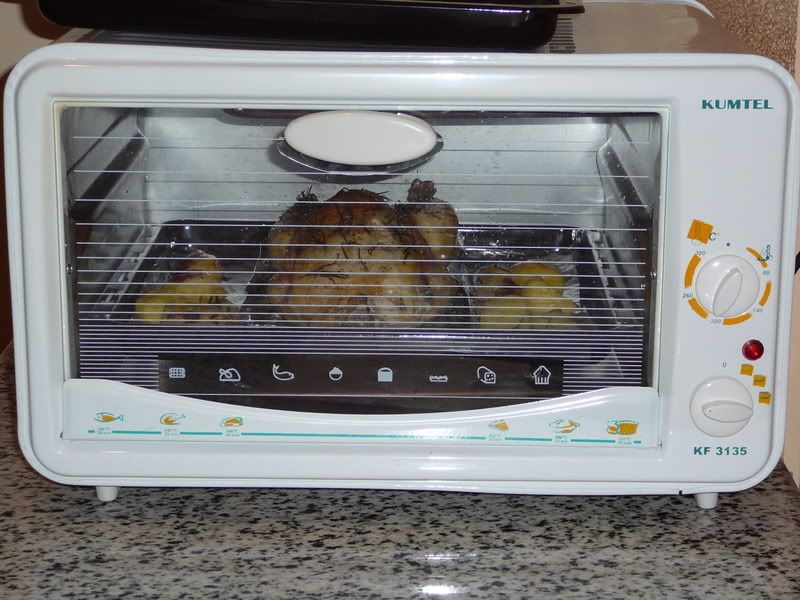
- Memanggang atau membakar dalam ketuhar adalah lebih selamat daripada menggoreng atau membarbeku kerana menggunakan suhu yang rendah.
- Memasak dalam ketuhar gelombang mikro, merebus, merenih dan mencarak pada suhu 212 F atau lebih endah dianggap agak selamat juga. Jika boleh elakkan memasak sup daripada lemak daging beku.
If you must eat meat, the NCI advises that you adopt less risky cooking methods.
According to the NCI:
- Oven roasting and baking are relatively safer than frying or barbecuing as they are done at lower temperatures.
- Stewing, boiling or poaching are done at or below 212 F, which is also quite safe.
Elakkan Daging / Avoid Meat
Selain itu, memakan daging juga boleh meninggikan kos perubatan seperti yang berlaku di Amerika Syarikat.
Menurut satu laporan dari sekumpulan doktor pada tahun 1995 dalam Preventive Medicine, rakyat Amerika membelanjakan antara US$28.6 bilion (sekarang kira-kira RM109 bilion) dan US$61.4 bilion (sekarang kira-kira RM233 bilion) setahun untuk membiayai rawatan perubatan bagi hipertensi, penyakit jantung, kanser dan kesakitan lain yang dikaitkan dengan pengambilan daging. (Laporan itu juga berkata, memakan daging tidak ubah seperti menghisap rokok dan ancaman kesihatan yang didedahkannya hampir sama jika anda memakannya secara berterusan sepanjang hayat".)
Berdasarkan semua bukti di atas, sebahagian daripada anda mungkin tidak lagi ingin memakan daging. Anda masih boleh mendapatkan sumber protein daripada sumber makanan lain seperti kacang dan produk berkacang, taufu, tempeh, kekacang, bijirin dan bijian.
Satu perkara lagi, kajian demi kajian mengesahkan golongan pemakan sayur lebih sihat daripada pemakan daging. Jadi kenapa anda tidak memulakannya sekarang?
____________________________________________________________________
Traditional wisdom decrees that one should always cook meat throughly to kill any food poisoning bacteria that may be present. But this recent study has indicated that cooking meat thoroughly can lead to cancer.
Eating meat is thus a case of between the devil and the deep blue sea! Not only that, meat consumption can also result in high medical bills, as was the case in the US.
According to a 1995 report in Preventive Medicine by a doctors group, Americans spends between US$28.6 bil (now worth about RM109 bil) and US$61.4 bil (now worth about RM233 bil) a year in medical costs for treatment of hypertension, heart disease, cancer and other illness attributed to meat consumption. (The report also says that eating meat is comparable to smoking tobacco and the health threat is "of a similar magnitude when you keep it up over a lifetime".)
With all these evidence, some of you might want to avoid meat completely. If so, take heart. You can still get protein from other food sources like beans and bean products. tofu, tempeh, lentils, seeds and nuts.
And here's another consolation: Study after study have confirmed that vegetarians are healthier than meat-eaters. So, why not start today?
Saturday, November 24, 2007
Leaching And Toxicity Of PVC Plasticisers
For soft applications such as toys designed for chewing (ie teethers), softeners or plasticisers are added to give the desired softness and flexibility. Without these additives, PVC is brittle, degrades easily and is not versatile.
Although a range of chemicals are used as softeners, phthalate esters (phthalates) are by far the most commonly used.
Phthalates do not bind to the PVC polymer but float around like water in a sponge. They remain present as a freely mobile and leachable phase in the plastic.
As a result, phthalates are continuously lost from soft PVC over time. This has long been recognised by the PVC industry itself. In fact, it has been known for 30 years that phthalates leach from soft PVC.
Pressure on a PVC product will increase leaching substantially. Of most concern is the leaching of plasticisers resulting from sucking or chewing on soft PVC toys, representing a direct bodily dose of these chemical to the infant or child.
Phthalates are moderately persistent and can bioaccumulate in fat tissue. Some may be broken down in the body, although degradation and excretion rates may differ between adults and children.
In addition, phthalates absorb atrongly to soil, and biodegrade slowly, creating the potential for constant human exposure.
Phthalates can exert additive effects when present as a mixture or in combination with other common environmental contaminants. Many of the phthalates are actually isomers of compounds of a similar carbon chain length. As a result, a single phthalate formulation may be contaminated with several different types of phthalates.
Laboratory research on the health effects of the phthalates has identified wide-ranging cronic effect. These include:
- liver and kidney lesions
- reproductive abnormalities, including testicular atrophy, altered development of reproductive tissue and subtle effects on sperm production
- cell line transformations
- cancers, including those of the liver, kidney and mononuclear cell leukemia.
Monday, November 19, 2007
Risiko Memasak Pada Suhu Tinggi/Risky High-Temperature Cooking
____________________________________________________________________
Four factors influence HCA formation : type of food, cooking method, temperature and time. Of the 4, temperature is the most important factor. According to the NCI, frying, broiling and barbecuing produce the largest amounts of HCAs because the meats are cooked at very high temperatures.
"Well Done" Meat Linked To Stomach Cancer
In another NCI study which assessed the diets and cooking habits of 176 people diagnosed with stomach cancer and 503 people without cancer, it was found that people who :
- ate their beef "medium well" or "well done" had more than 3 times the risk of stomach cancer than those who ate their beef "rare" or "medium rare".
- ate beef 4 or more times a week had more than twice the risk of stomach cancer those who ate beef less frequently.
Hamburgers And Lymph Node Cancer
A study of 35,000 older women shows that those with diets high meat and animal fat , especially hamburger, have double the risk for lymph node cancer - also known as non-Hodgkin's lymphoma. Research believe that it may be related to the way the hamburgers are cooked.